News & Events
Christine Cunningham on the Importance of Engineering Education in the Age of AI
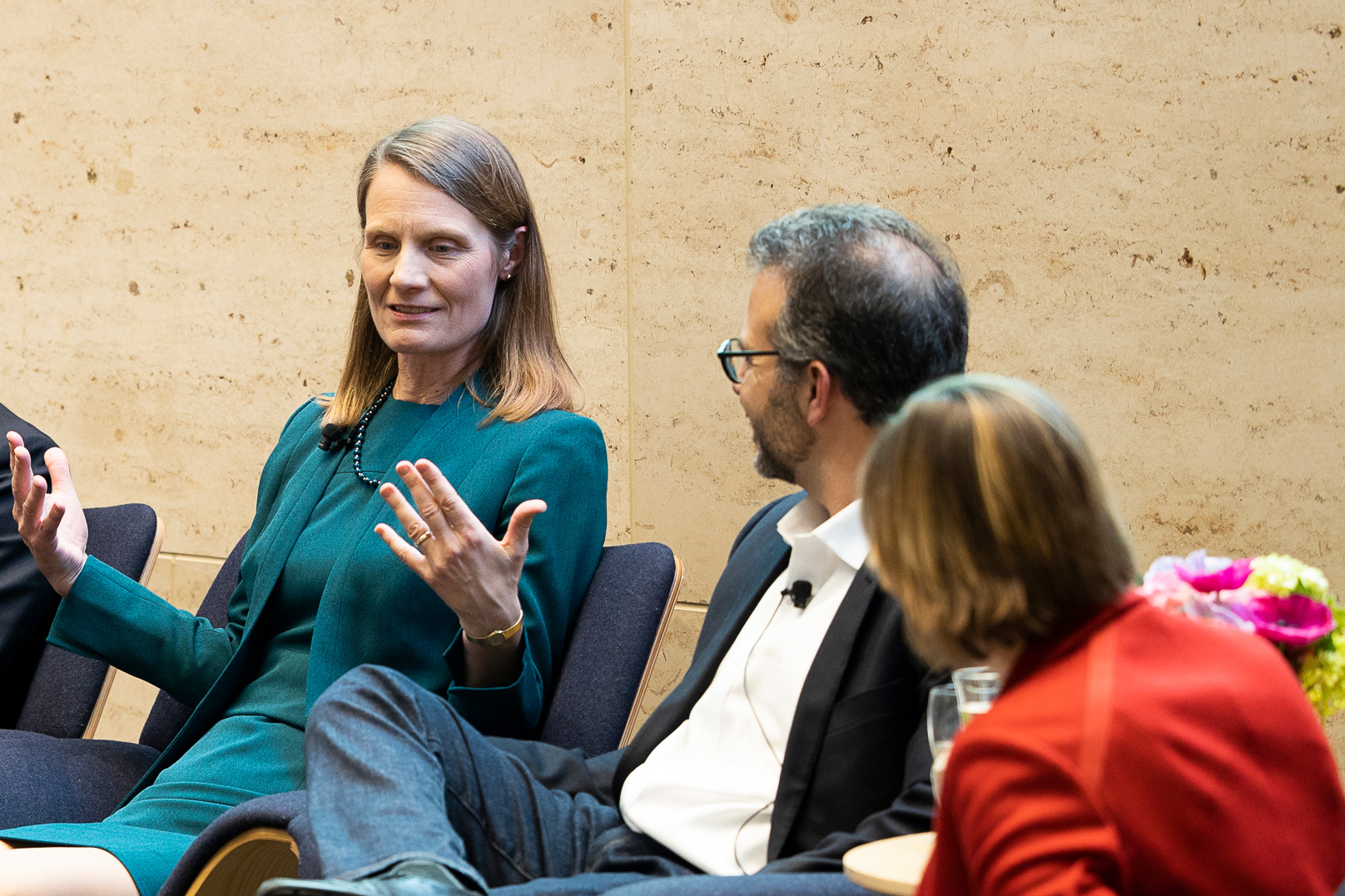
In 2017, Christine Cunningham was awarded the McGraw Prize for her work as the founding director of Engineering is Elementary (EiE), meant to foster engineering and technological literacy among elementary school students and educators.
Though EiE evolved into Youth Engineering Solutions (YES) in 2024, its mission remains the same. “We want all learners to engage with meaningful problems, develop problem-solving abilities, and see themselves as capable of using STEM to improve the world,” said Cunningham, author of Engineering in Elementary STEM Education and Chief Curriculum and Learning Officer at the Museum of Science, Boston.
We recently followed up with Cunningham about her work at the museum, the importance of engineering education, and what AI means for the future of education:
What did winning the McGraw Prize mean to you?
Christine Cunningham: Winning the McGraw Prize was deeply gratifying because it recognized an idea that, when we began, was still seen by many people as unusual: that young children can meaningfully engage in engineering. The prize helped affirm that engineering belongs in pre-K–12 education as a powerful way for children to understand and shape the human-made world around them.
It was also a recognition of an extraordinary team effort. Our pioneering work in pre-K–3 engineering was never the work of one person; it involved close collaboration with teachers, districts, curriculum coordinators, funders, and, most importantly, students. The McGraw Prize gave visibility to our mission and helped celebrate the growing movement to make engineering education accessible, engaging, and relevant for all learners.
What gave you the idea that children of all ages can—and should—learn engineering?
CC: To me, the question was never whether young children could engineer, but what age-appropriate engineering should look like. How could we nurture the passion for innovating, designing, and problem-solving that young children possess? I decided I wanted to focus my work on these questions.
Teaching engineering at an early age makes sense because we live in a designed world. Nearly everything around us exists because someone identified a problem or opportunity and created a solution. Helping children engage in the engineering design process allows them to see themselves as capable of shaping the world around them. Just as importantly, these early experiences help children begin developing an identity as problem solvers—an identity that is helpful regardless of what career paths they ultimately pursue.
What are your responsibilities as Chief Curriculum and Learning Officer at the Museum of Science, Boston?
CC: A major part of my role is setting the vision for our work. I think about where STEM education is headed, how we can both lead and respond to emerging trends, and how we can help educators meet the realities of today’s classrooms and students. I also help develop the conceptual frameworks that guide our materials, lead research and evaluation, build partnerships, secure funding, and support the business and customer-success dimensions of our work.
My work is part of the Museum of Science’s broader mission to inspire a lifelong love of science in everyone. As part of our museum’s leadership team, I am involved in ongoing strategic and operational planning focused on how we advance that mission across the three primary channels through which we engage audiences: schools, digital platforms, and experiences on our Museum floors.
In a world increasingly shaped by artificial intelligence, why does hands-on pre-K–12 engineering education matter?
CC: Hands-on pre-K–12 engineering education is increasingly essential because the skills young people will most need to navigate the world and its new technologies are fundamentally human ones. AI can generate information and automate certain tasks, but it cannot replace human curiosity, judgment, creativity, empathy, collaboration, or the ability to define meaningful problems worth solving.
Engineering education gives students opportunities to practice those capacities from an early age. When students engage in hands-on engineering challenges, they learn to ask questions, identify needs, test ideas, evaluate evidence, work collaboratively, communicate their thinking, and improve solutions through iteration. They learn that complex problems rarely have one perfect answer, and that good solutions require balancing tradeoffs, constraints, ethics, and human needs.
Just as importantly, engineering helps students become thoughtful creators and decision-makers rather than passive consumers of technology. We live in a world increasingly shaped by human-designed systems, including AI. Young people need to understand not only how technologies function, but also how technologies affect people, communities, and society. Engineering experiences help students see that they have agency—that they can shape technologies and systems.
Ultimately, pre-K–12 engineering education prepares thoughtful, creative, collaborative problem- solvers who can navigate and improve a rapidly changing world.