News & Events
What 2025 Taught Us About the Future of Learning
Education rarely stands still, and in 2025, it moved faster than ever.
Across classrooms, campuses and community learning spaces, this year delivered a clear message: The future of education isn’t something we’re waiting for. It’s something that educators and innovators build every day.
As we close the year, the McGraw Prize community — now more than 100 winners strong — offers a unique window into how learning is being transformed across every stage of life. The work of our 2025 Prize winners exemplifies the momentum we are witnessing across the field: a commitment to equity, a belief in learner agency and a willingness to reevaluate long-standing structures to address today’s challenges.
Here are three lessons from 2025, from our current winners:
1. Innovation is most powerful when it expands access
From personalized learning tools in Sub-Saharan Africa to new approaches to undergraduate success across urban universities, 2025 underscored that innovation matters most when it reaches those furthest from opportunity.
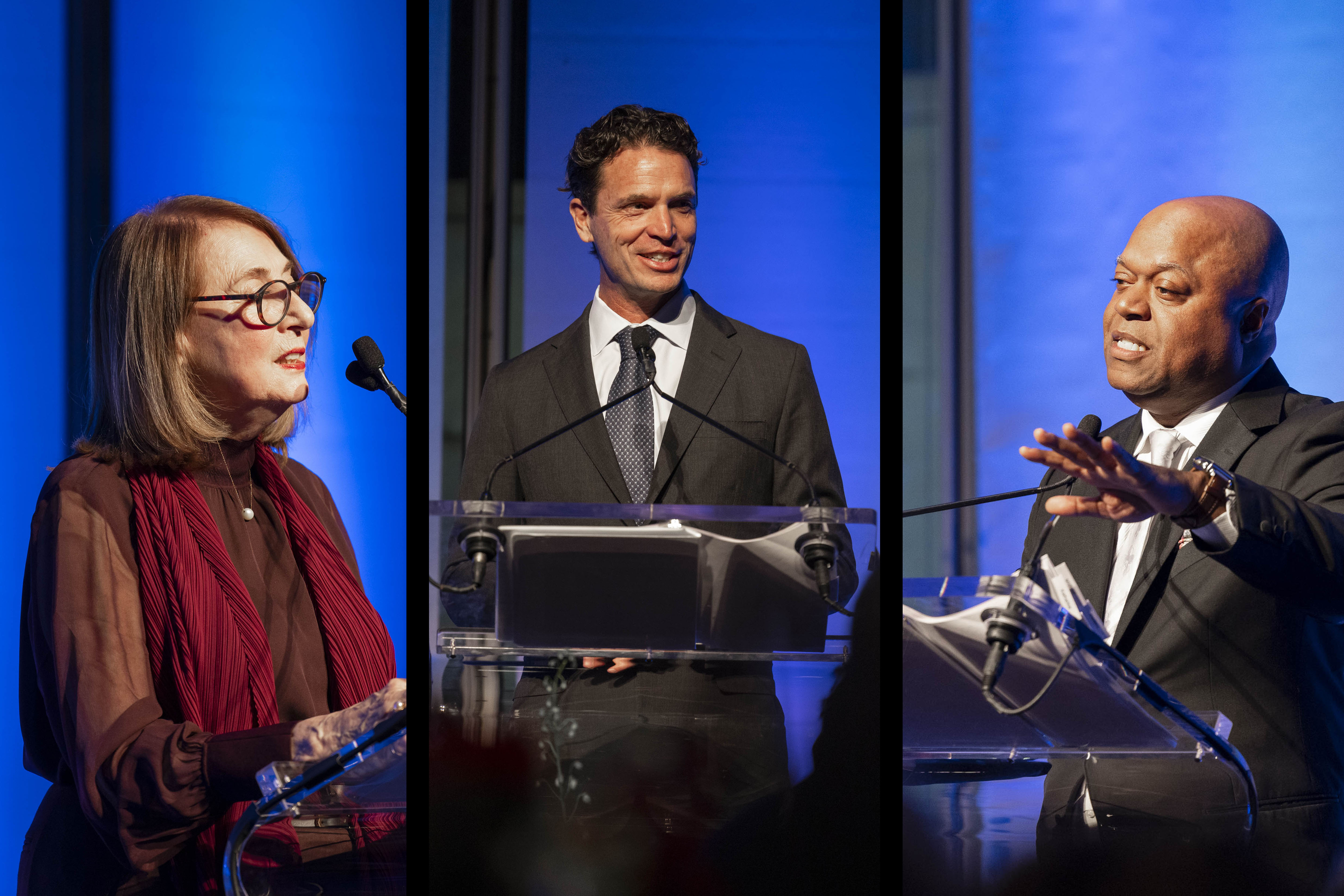
“We cannot ask children to wait for a future that may never arrive … What if every child — no matter where they are born — could master the foundational skills they need to thrive and realize their potential? And what would be the long-term societal impact if half the world’s children finally received the education they deserve?” — Joe Wolf told the McGraw Prize gala attendees last month in New York City. Wolf along with Co-Ceo Rapelang Rabana received the McGraw Prize in PreK-12 education.
2. Community remains the heart of transformation
Whether inside a STEM museum or a classroom, this year showed the power of human connection in driving learning. Even as technology reshapes how we teach, it is our community that strengthens why we teach.
“Science is indeed everywhere and for everyone. But, while we have made tremendous gains through STEM, we still have much work to do to better connect science and technology, with civility, community and politics, making sure we take care of our planet, thwart climate change, feed the needy, provide housing for the homeless and ultimately eradicate poverty both in this great nation and around the globe.” — Frederic Bertley, winner of the 2025 McGraw Prize in Lifelong Learning.
3. Higher education is in a moment that calls for boldness
In 2025, university leaders faced real pressures: affordability, trust, shifting expectations from students and employers. Yet we also saw powerful examples of what happens when institutions rethink outdated structures and design for equity, collaboration and student success.
“Education takes a village. It takes community. It takes heart and strength and love. Collaboration by difference. Turning mirrors into windows for all. We have a very, very long and hard fight ahead if we are going to save higher education at this perilous moment.” — Cathy N. Davidson, winner of the 2025 McGraw Prize in Higher Education
What the McGraw Prize Community Told Us This Year
Across webinars, conversations and events, several themes came through from our broader network:
- Learners need more flexible pathways (across careers, ages, and geographies).
- Technology must serve human purpose, not replace it.
- Education systems should measure what matters, not just what’s easy to capture.
- Global solutions matter, because no single country is facing these challenges alone.
These insights came not only from the 2025 winners, but from the past Prize recipients whose continued work shapes fields ranging from learning science to district leadership to workforce development.
Looking Ahead to 2026
If 2025 was about redefining what’s possible, 2026 will be about acting on that momentum.
Next year, we expect to see:
- More nations prioritizing foundational learning and new models for scaling it.
- A continued push for institutional transformation in higher education, especially around affordability, belonging and career-connected learning.
- Growing investment in lifelong learning, especially in science, workforce skills and community-based learning.
- Wider use of evidence-based innovation, combining research with practical, scalable solutions.
The McGraw Prize will continue to champion the leaders moving this work forward — those who take risks and meet learners where they are.
Every year, the McGraw Prize reminds us of a simple truth: Education is a force shaped by people—by their courage, their imagination and their belief in what learners can achieve.
We are inspired by what this community accomplished in 2025, and we look with hope toward the leaders who will emerge in 2026.
Nominations for the 2026 McGraw Prize are now open.
We invite you to help us identify the next innovators who are transforming learning at every stage of life.