News & Events
Education as a Public Good
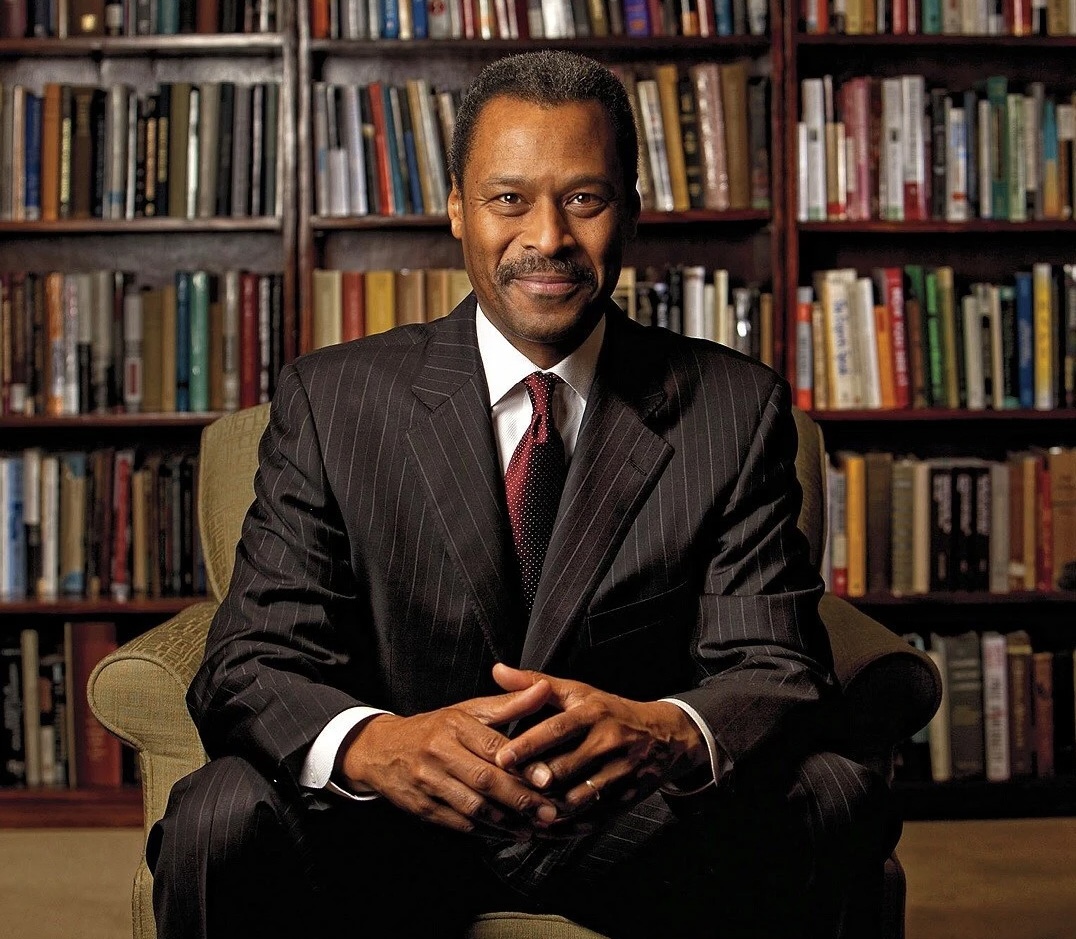
A conversation with Executive Director of the McGraw Center for Educational Leadership John Silvanus Wilson, Jr.
Part two in a two-part series.
What unites McGraw Prize winners is purpose: a commitment to advancing education as a public good.
For John Silvanus Wilson, Jr., that commitment has never been abstract. In the second in a two-part series, the executive director of the McGraw Center for Educational Leadership at Penn GSE and steward of the Harold W. McGraw, Jr. Prize in Education shares his thoughts on education as a public good—and why he is so driven.
Your career has spanned higher education, public service, and civic engagement. How have those experiences shaped your view of what education must do for the public good?
Advancing the public good can no longer be an implied goal. The stakes are too high.
A fragile democracy and an imperiled planet are not separate challenges. A broken democracy cannot heal a broken planet.
Education must ground students in facts, including the scientific realities of climate change. Data-driven climate awareness should be foundational in both K–12 and higher education.
At the same time, we must strengthen civic understanding and cooperation. If we are serious about addressing global challenges, we need citizens who understand both democratic responsibility and shared humanity.
That dual mission—revitalizing democracy and confronting climate reality—is among the most vital responsibilities education now carries.
The McGraw Prize honors changemakers across sectors. What qualities do the most impactful leaders share?
The McGraw Prize recipients are more than changemakers. Many are paradigm shifters.
From Claiborne Pell’s expansion of college access, to Kenneth and Mamie Clark’s foundational civil rights research, to innovators like Sal Khan, Wendy Kopp, Deborah Bial, and Reshma Saujani, these leaders reimagined what education could be.
Across sectors, several qualities stand out: creativity, determination, courage, and a refusal to remain silent in the face of controversy. They are not neutral about equity or access. They define the future rather than wait for it.
And they sustain their work through hope. Hope may not be a strategy, but without it, sustained change is impossible.
What excites you most about the McGraw Center’s opportunity to cultivate the next generation of leaders?
Penn GSE is already an important incubator of educational leadership. The opportunity now is to add value—to deepen the connection between aspiring leaders and the extraordinary community of McGraw Prize winners.
The Prize tradition represents a living repository of leadership wisdom and hard-earned insight. Building stronger bridges between those leaders and the Penn GSE community can elevate both.
Our goal is simple: to extend the Prize tradition while ensuring that the McGraw Center becomes a platform for cultivating leaders who are equal to this moment.
Who has most influenced your leadership journey?
Two people shaped me profoundly.
The first is my mother, Genester Nix Miller, a lifelong sixth-grade teacher. She mastered the craft of teaching. She knew how to connect people with their potential and encouraged us to pursue mastery and purpose, not just achievement. Decades after her retirement, former students still stopped her to say she was the best teacher they ever had. At 98, she continues to elevate those around her.
The second was Dr. Benjamin Elijah Mays, former president of Morehouse College. As a freshman, I was a vocal critic of the institution. During a brief encounter, Dr. Mays challenged me to stay, excel, gain experience, and return to make a difference.
That moment shifted my posture from critic to changemaker.
Mark Twain wrote that the two most important days in your life are the day you are born and the day you discover why. Dr. Mays helped me discover my “second day.” That sense of purpose has guided my leadership ever since.
Through its programs, including the Harold W. McGraw, Jr. Prize in Education, the McGraw Center advances leaders who expand opportunity and strengthen education as a public good. Learn more at mcgrawprize.com.