News & Events
McGraw Prize Winner Wendy Kopp in the News: First Jobs, Lasting Impact
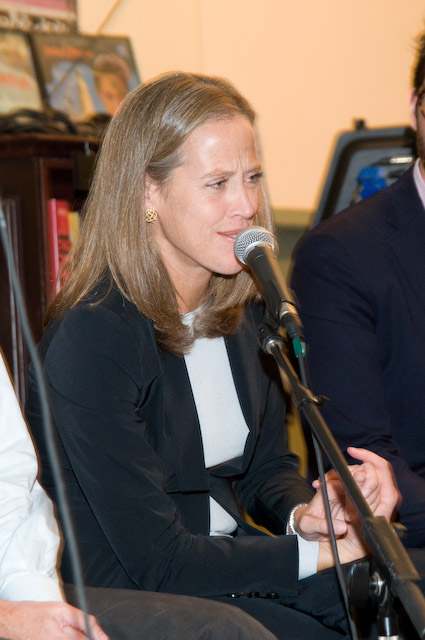
McGraw Prize winners’ broader impact continues long after the awards ceremony. Since winning in 2006, Teach For America Founder Wendy Kopp co-founded Teach for All, where she is currently CEO, and authored the book A Chance To Make History: What Works and What Doesn't in Providing an Excellent Education For All.
Her influence continues to be felt, including in a recent Atlantic article that makes the persuasive case that first jobs are more than a launchpad—they’re a turning point. Kopp said that more graduates should start out in public-interest roles to expand their perspective and, more broadly, to contribute to society.
“If we want to address society’s most deeply rooted challenges—poverty, polarization, environmental degradation, geopolitical conflict—we need to encourage young people to work on these issues early in their careers, so they can grow into leaders capable of solving them,” she writes.
Kopp cites research suggesting that early public-service work can fundamentally reshape how people understand inequality, leadership, and their own capacity for change. She writes, “Research confirms that working close to the roots of social issues early in one’s career fundamentally reshapes a person’s beliefs and life trajectory.”
Kopp has the data to back up her claim: About 75% of Teach for All alumni, including Teach for America participants, go on to careers tackling systemic challenges as educators, policymakers, or entrepreneurs. The Peace Corps has had a similar impact, with alumni leading major public-sector efforts. Other service roles, such as working as an EMT or supporting unhoused people, can be just as formative, shaping how people see and engage with the world.
Kopp urges a rethink of the “traditional” educational pipeline: high schools should promote real-world engagement, colleges should steer graduates toward public-interest jobs, and employers should value these formative experiences. “The public and social sectors should create more options for students to do this sort of work, and ensure these options are visible and accessible,” she writes.
As AI reshapes entry-level work, service roles offer graduates a timely and meaningful starting point. “Many corporations will soon need fewer staffers straight out of college to do routine work,” writes Kopp, “but they will still need people among their senior ranks with strong leadership qualities.”
Service jobs can help to build the empathy, perspective, and leadership needed to tackle global challenges. Kopp concludes that “we should all help young people see that their generation’s first jobs predict the future—not only of their careers but of their world.”
Photo: Energetic Communications, CC BY 2.0 <https://creativecommons.org/licenses/by/2.0>, via Wikimedia Commons